Selecting the Right Asphalt Patch Technique for Different Pavement Failures
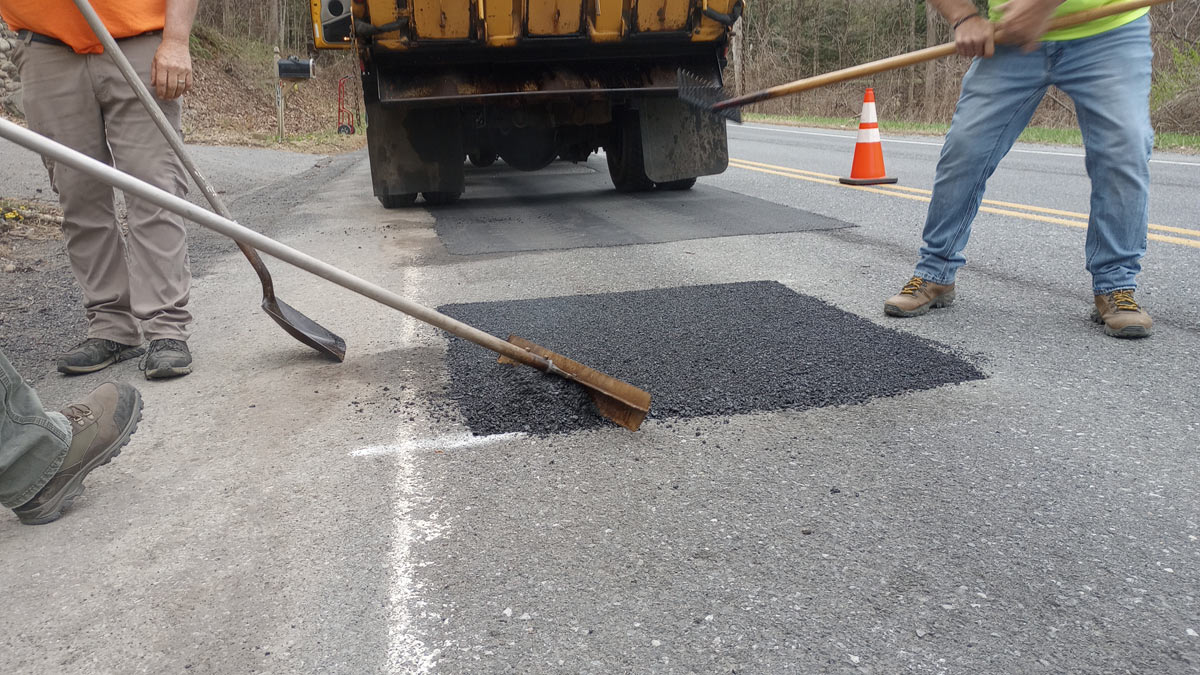
When a pavement distress shows up, the clock is ticking: water will keep infiltrating, loads will keep pounding, and small flaws will morph into costly rebuilds. Choosing the right patching method, matched to the failure’s cause, extent, traffic level, and climate, reclaims service life efficiently and helps your budget go further. Below is a field-practical guide you can hand to crews or incorporate into a decision tree in your pavement-management software.
Know Your Enemy: Categorizing Pavement Failures
| Failure Symptom | Root Cause | Severity Progression |
|---|---|---|
| Potholes (bowl-shaped voids) | Water-weakened base + traffic pumping | Small cup → wheel-grabber crater |
| Alligator (Fatigue) Cracking | Repeated bending, inadequate structure | Fine spiderweb → broken slabs |
| Longitudinal & Transverse Cracks | Thermal movement, reflective cracking, joint weakness | Hairlines → open seams → raveling |
| Edge Cracking | Shoulder drop-off, poor drainage | Fine edge map → potholes along lane edge |
| Rutting / Depressions | Mix instability, base failures, heavy channelized loads | Shallow groove → bottom-out rut |
| Surface Raveling | Oxidation, poor adhesion, snowplow abrasion | Fine aggregate loss → coarse aggregate pop-out |
| Utility Cuts / Trenches | Planned excavation | Settling, reflective cracks along patch perimeter |
Patch Technique “Cheat Sheet”
| Patch Technique | Best For | Typical Service Life* | Crew & Equipment Needs | Seasonal Suitability |
|---|---|---|---|---|
| Throw-and-Go Cold Patch | Emergency potholes, winter temps | Days – weeks | 1–2 person crew, hand tools | All seasons, excels below 40 °F |
| Semi-Permanent Cold Patch(clean, tack, place, compact) | Low-volume roads, shoulder potholes | Months | Pickup roller/tamper | Year-round |
| Spray-Injection Patch | Small potholes, edge failures | 1–3 years | Patch truck w/ emulsion & aggregate | Above 40 °F, dry |
| Infrared Thermal Patch | Shallow potholes, raveling, cold joints | 3–6 years | Infrared heater, rake, plate/roller | 35 °F + & dry |
| Full-Depth Remove & Replace (“Dig-Out”) | Alligator areas, severe base failure | 8–15 years (often matches adjacent pavement) | Saw, backhoe, trucks, paver, roller | Above 50 °F, stable weather |
| Mill-and-Fill (Partial-Depth) | Rutting, utility cuts, wide fatigue cracking | 6–10 years | Milling machine, paver, roller | 40 °F +, dry surface |
| Mastic/Polymer Patch or Crack-Seal Bandage | Wide transverse cracks, early fatigue weave | 5–7 years | Melter, wand, squeegee | 40 °F +, dry |
| Spray Polymer Micro-Patch (“chip patch”) | Early raveling, friction loss | 3–5 years | Spray rig, chip spreader | 50 °F +, dry |
*Assumes good prep and compaction; traffic & climate can shorten or extend actual life.
Decision Workflow
-
Is it Structural or Cosmetic?
-
Structural: base or sub-base integrity compromised → full-depth repair.
-
Cosmetic/Surface: mix oxidation, isolated pothole → surface or partial-depth patch.
-
-
How Big Is the Footprint?
-
< 2 ft²: consider spray-injection or infrared.
-
2 – 20 ft²: semi-permanent cold patch or infrared.
-
20 ft² or interconnected cracking: mill-and-fill or full-depth dig-out.
-
-
Traffic & Closure Limits
-
High-volume arterial: prefer fast-setting options (spray-injection, infrared, hot-mix dig-out) during low-traffic windows.
-
Local/low-volume: semi-permanent cold patch may suffice.
-
-
Climate & Season
-
< 35 °F and/or wet: emergency cold patch only; schedule follow-up hot-mix fix in spring.
-
Freeze-thaw prone zones: avoid water-sensitive patches (e.g., avoid tackless throw-and-go lasting into spring).
-
-
Budget vs. Life Cycle Cost
-
If capital is short but labor abundant, semi-permanent cold patch buys time.
-
If labor is scarce, a higher-cost mill-and-fill may be cheaper long-term.
-
Field Best Practices
| Step | Why It Matters | Tips |
|---|---|---|
| Cut clean edges | Gives patch vertical faces to bond | Use a saw or air hammer; square or rectangle cuts resist shear |
| Dry & clean the hole | Moisture kills adhesion | Compressed air + heat lance if available |
| Use tack coat or emulsion | Chemically bonds new & old asphalt | Light, uniform spray - don’t flood |
| Place in lifts ≤ 2 in. | Ensures inner material densifies | For deeper dig-outs, compact each lift separately |
| Compact to 92-96 % density | Eliminates voids, locks aggregate | Vibratory plate on small patches, roller on large |
| Seal edges | Keeps water out | Finish with mastic or crack-seal band at perimeter |
Infrared vs. Dig-Out Case Study (1-Lane Collector)
| Metric | Infrared Patch | Full-Depth Dig-Out |
|---|---|---|
| Patch Size | 9 ft² (3 × 3 ft) | 25 ft² (5 × 5 ft) |
| Closure Time | 20 min | 2 hr |
| Initial Cost | $6/sf | $12/sf |
| Expected Life | 5 yr | 12 yr |
| Life-Cycle Cost/Year | $10.80 | $10.00 |
Result: Although the dig-out costs double up front, its annualized life-cycle cost equals or slightly undercuts the infrared fix—valuable insight for budget planners.
Build a Patch Library in Your PMS
Modern pavement-management systems (PMS) let you attach custom patch templates with cost, crew hours, materials, and life extension. Load these tactics (plus your local unit costs) into your PMS so technicians can select the best option from the field tablet, turning this article into actionable workflow.
Key Takeaways
-
Correct diagnosis drives value - patching symptoms without fixing causes wastes dollars.
-
Match technique to failure size, depth, and traffic - one size never fits all.
-
Season and moisture dictate material choice - plan permanent fixes for warm-dry windows.
-
Good prep and compaction outrank material brand - craftsmanship is king.
-
Track performance - log patch dates and condition scores to refine your decision rules every season.
Equip your crew with the right technique for the right problem, and your asphalt patches will outlast their warranty, and maybe even your next budget cycle.


Life-Cycle Assessment of Pavement Alternatives: Quantifying Environmental Impacts from Cradle to Grave

When Is the Best Time of Year to Sealcoat?

Poor Subgrade Support: Detecting and Fixing the Root of Premature Rutting

Developing a Pavement Rehabilitation Plan Based on PCI Data

Joint Resealing & Spall Repair for Concrete Roads
