Poor Subgrade Support: Detecting and Fixing the Root of Premature Rutting
Why Subgrade Strength Matters
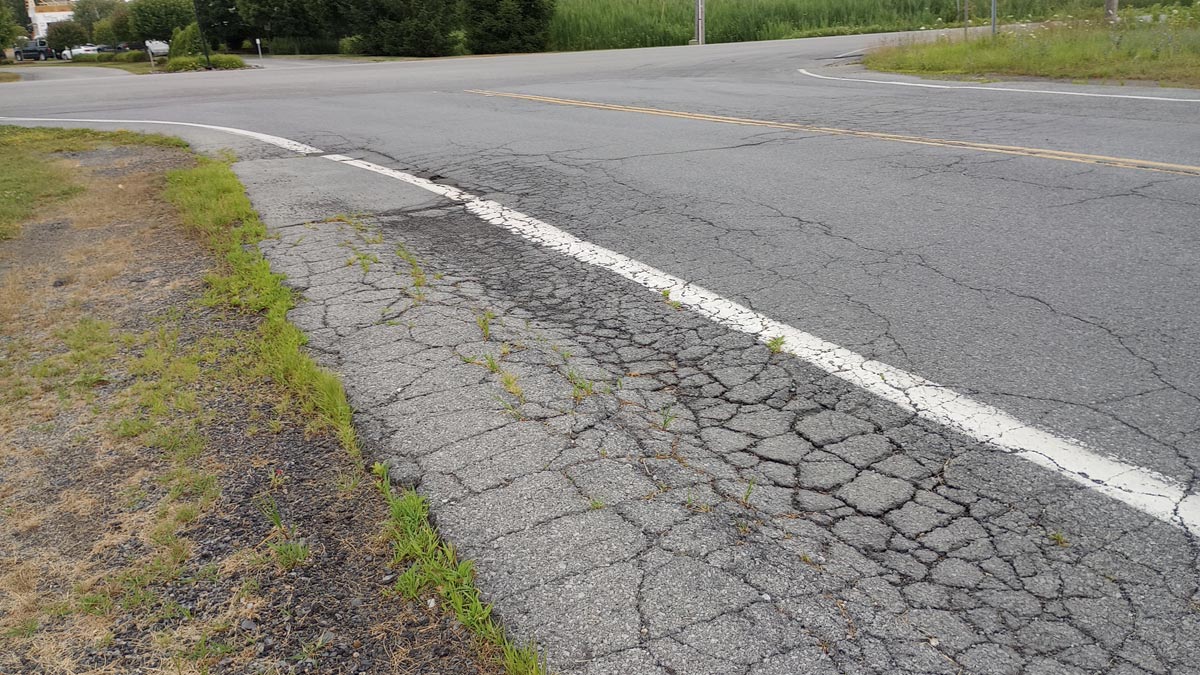
The subgrade is the ultimate load-bearing layer of every pavement system. If it lacks adequate stiffness or uniformity, vertical wheel loads are amplified downward, causing plastic deformation that migrates back to the surface as ruts. FHWA research shows that rutting initiated in a weak subgrade or base accelerates fatigue cracking and roughness long before the asphalt layer itself reaches the end of its design life. (Federal Highway Administration)
Mechanisms of Subgrade-Driven Rutting
| Mechanism | How it Spurs Rutting | Typical Visual Clues |
|---|---|---|
| Excess moisture & pore-water pressure | Softening and loss of resilient modulus under repeated traffic | Ruts deepen rapidly after heavy rain; pumping or “washboard” next to wheel paths |
| Inadequate compaction or density decay | Plastic shoving under cyclic loads | Slight surface ripples that become full-depth depressions |
| Frost heave/thaw cycles | Seasonal loss of bearing capacity | Ruts appear each spring, sometimes with asphalt upheaval on shoulders |
| Heterogeneous soil lenses | Localized weak pockets | Isolated ruts, often staggered between wheel paths |
| High plasticity clays or expansive soils | Volume change and shear weakness | Longitudinal cracking flanks the rut; rut “shoulders” crumble |
Early Surface‐Level Red Flags
-
Rutting depth ≥ 10 mm within two years of paving
-
Corrugations or longitudinal cracks tracking the wheel path
-
Sudden IRI (roughness) spikes detected by automated profilers
While rutting confined to the asphalt can often be milled and overlaid, surface symptoms alone cannot confirm whether the subgrade is the culprit. A structured investigation is essential.
Subsurface Diagnostic Toolkit
| Test / Method | What It Measures | Strengths | Limitations |
|---|---|---|---|
| Falling Weight Deflectometer (FWD) | Layer moduli back-calculated from deflection basins | Non-destructive, network-level screening; precise modulus maps | Requires experienced interpretation; temperature correction needed (Federal Highway Administration) |
| Dynamic Cone Penetrometer (DCP) | In-situ penetration resistance (DCPI) versus depth | Fast, low-cost, ideal for pinpointing weak lenses | Limited to ~1 m depth; coarse soils may skew results (ResearchGate, Irsm) |
| Ground-Penetrating Radar (GPR) | Dielectric contrast, moisture pockets, thickness | Continuous coverage at traffic speed | Calibration cores still required |
| Borehole Sampling & Resilient Modulus Lab Tests | Precise MR, Atterberg limits, moisture content | Gold-standard design inputs | Time-consuming and disruptive |
| Embedded Stress/Strain Gauges (New Construction) | Live subgrade response under traffic | Research-grade insight for modern designs | Not feasible for legacy pavements |
Decision Rule: If back-calculated subgrade MR < 60 MPa (≈ 8.7 ksi) under design loads, or DCPI > 20 mm/blow in the upper 300 mm, remedial action-not just resurfacing-is usually warranted. (Federal Highway Administration)
Repair & Rehabilitation Options
Improve Drainage First
-
Cut-off ditches, daylighting, longitudinal underdrains to keep the subgrade below 80 % saturation.
-
Permeable treated base layers to intercept water before it reaches the soil.
Neglecting drainage undermines every structural fix.
Chemical or Mechanical Stabilization
| Technique | Suitable Soils | Typical Depth | Expected MR Gain |
|---|---|---|---|
| Lime stabilization | Plastic clays (LL > 25 %) | 300-500 mm | 2-5× increase |
| Cement stabilization | Silty / granular soils | 200-300 mm | 3-7× increase |
| Enzyme / polymer additives | Fine-grained, low traffic | 150-250 mm | 1.5-3× increase |
Geosynthetic Reinforcement
-
Geogrids in the base or subgrade distribute wheel loads and limit shear strains.
-
Geocells confine granular fill, increasing bearing capacity by up to 50 %. (ScienceDirect, ScienceDirect, TRID)
Undercut & Replace (“Dig-outs”)
Remove weak pockets and backfill with select granular material-best for short, isolated rut stretches.
Full-Depth Reclamation with Stabilization
Pulverize asphalt and base, blend with cement or foamed asphalt, and re-compact-cost-effective for long segments with pervasive subgrade issues.
Design & Construction Guardrails to Prevent Recurrence
-
Uniform Compaction: Specify minimum 95 % of AASHTO T-99 density and verify with nuclear or intelligent compaction rollers.
-
Seasonal Timing: Build heavy lifts during low-moisture months; lime-treated subgrades should cure ≥ 3 days above 10 °C.
-
Resilient Modulus‐Based Thickness Design: Use M-E Pavement Design Guide inputs calibrated for local climate and traffic mix. (Federal Highway Administration)
-
Quality Assurance (QA) Plans: Include real-time stiffness measurements (e.g., P-wave modulus) to catch weak spots before paving.
-
Post-Construction FWD Benchmarking: Establish a structural baseline for future maintenance triggers.
Monitoring After Rehabilitation
| Tool | Interval | Trigger Threshold |
|---|---|---|
| Automated rut-depth lasers | Annual or after 10 million ESALs | Rut ≥ 6 mm |
| FWD structural index | 3-5 years | Subgrade MR drop > 20 % |
| Visual distress surveys | 1-2 years | Appearance of crack-flanked ruts |
Proactive monitoring allows low-cost preservation treatments (e.g., thin overlays) long before deep rutting re-emerges.
Key Takeaways
-
Poor subgrade support is the hidden driver of many “mystery” ruts that reappear soon after resurfacing.
-
A layered diagnostic approach-surface distress recognition, non-destructive testing, and selective coring-pins down whether the problem is structural or mix-related.
-
Permanent fixes nearly always pair drainage upgrades with chemical, mechanical, or reinforcement solutions that raise the subgrade’s resilient modulus above design thresholds.
-
Building QA into every phase-from material selection to intelligent compaction and FWD benchmarking-safeguards against premature rutting for the pavement’s full service life.
By rigorously identifying and fortifying weak subgrades, agencies can break the costly cycle of rut-patch-repave and deliver pavements that endure their full design lives under modern axle loads.


Life-Cycle Assessment of Pavement Alternatives: Quantifying Environmental Impacts from Cradle to Grave

When Is the Best Time of Year to Sealcoat?

Poor Subgrade Support: Detecting and Fixing the Root of Premature Rutting

Developing a Pavement Rehabilitation Plan Based on PCI Data

Joint Resealing & Spall Repair for Concrete Roads
