Building a Long-Life Asphalt Pavement: Layer Thickness, Lift Count & Compaction Goals
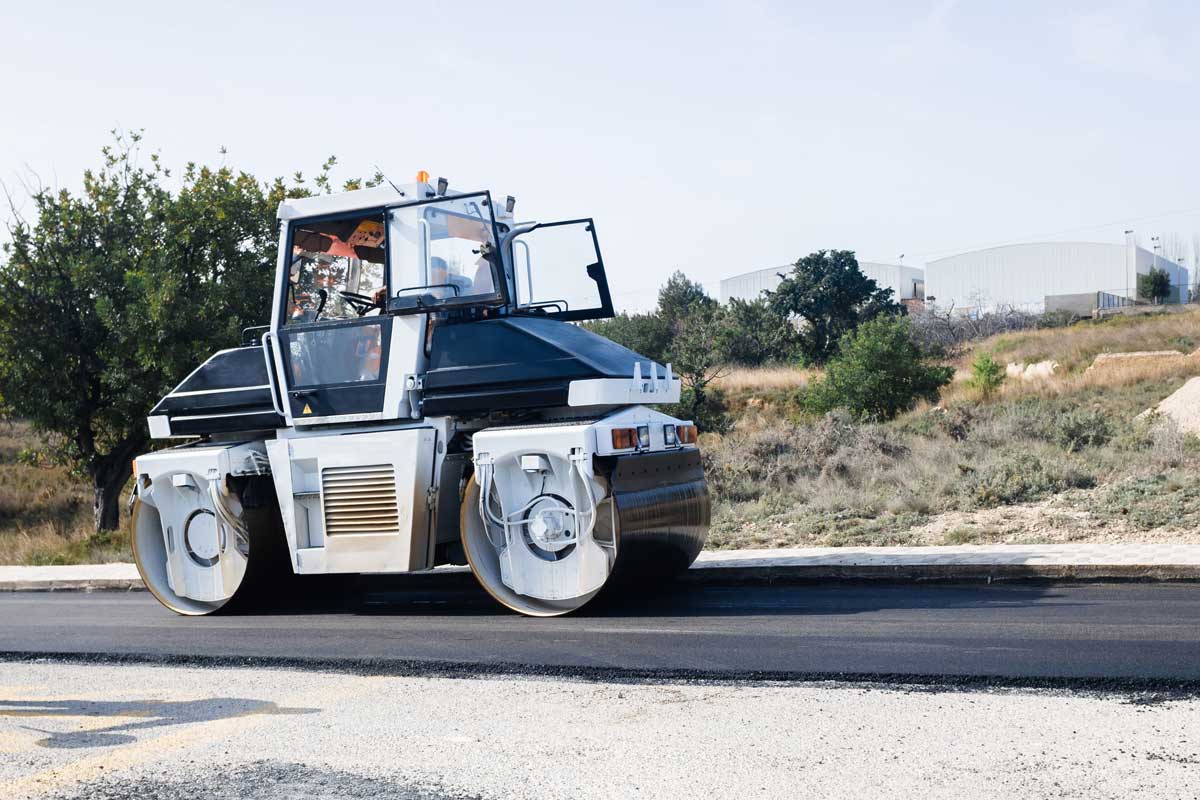
A “long-life” or perpetual asphalt pavement is engineered so that the bottom of the asphalt structure never experiences fatigue cracking during its design life (often > 50 years). When distress finally appears, it is confined to the upper few inches and can be removed with a mill-and-fill, avoiding full-depth reconstruction. Achieving that outcome hinges on three construction variables you directly control in the field:
| Variable | Why it matters | What success looks like |
|---|---|---|
| Layer (lift) thickness | Controls how load stresses dissipate and how well the mix can be compacted. | Each lift is thick enough to embed aggregate but thin enough to cool evenly—generally 3-5× the nominal maximum aggregate size (NMAS) and within the roller’s compaction capacity. (asphaltinstitute.org) |
| Lift count (number of paving passes) | Determines whether the total structural thickness can be placed without segregation or trapped air. | A perpetual pavement usually totals 8-12 in. of asphalt in 3-5 lifts, thicker sections in fewer lifts for heavy highways, thinner lifts for municipal streets. (asphaltpavement.org, asphaltinstitute.org) |
| Compaction (in-place density) | The single biggest predictor of durability; every percent of air voids you remove exponentially lengthens service life. | Modern specifications target 92-96 % of Gmm across the mat and ≥ 90 % at longitudinal joints; each extra 1 % density extends life roughly 10 %. (fhwa.dot.gov, fhwa.dot.gov) |
Designing the Structural Recipe
1.1 Total Thickness for Perpetual Performance
Mechanistic–empirical (M-E) software such as PerRoad or AASHTOWare Pavement ME is used to find the minimum total asphalt thickness that keeps tensile strain at the asphalt-base interface below the critical fatigue threshold. For high-volume highways this often yields > 8 in. total HMA; for low-volume roads the thickness may drop to 6 in. but still needs careful construction controls. (asphaltpavement.org)
1.2 Course Structure
A three-layer “rich-intermediate-surface” stack is common:
| Course | Typical mix & purpose | Thickness range |
|---|---|---|
| Base (bottom) | Coarse-graded, fatigue-resistant with higher binder content (e.g., 25-37.5 mm NMAS). | 3-5 in. (often in ≥ 2 lifts) |
| Intermediate/binder | Bridges aggregate sizes; stiff enough for rut resistance. | 2-3 in. |
| Surface (wearing) | Fine-graded SMA or dense-graded; provides texture and low permeability. | 1.5-2 in. |
Designers sometimes substitute a thin stone-matrix asphalt (SMA) surface over a rich-bottom layer to improve rut resistance while lowering surface-down reflective cracking risk.
Getting Lift Thickness Right
2.1 The 3× NMAS Guideline
The Asphalt Institute and many DOTs require minimum lift depth = 3 × NMAS so aggregate can re-orient under compaction without bridging, which would trap air and moisture. (asphaltinstitute.org, asphaltinstitute.org)
Example: A 12.5 mm NMAS surface mix needs ≥ 38 mm (1.5 in.) lift; a 19 mm NMAS binder mix needs ≥ 57 mm (2.25 in.).
2.2 Upper Thickness Limits
Lift thickness is also capped by the roller’s ability to drive densification heat through the layer:
-
Static steel or pneumatic rollers: ~3 in. max per lift.
-
Vibratory/high-frequency rollers: up to 4 in. (with temperature management).
-
Smart compaction + thermal trailers: can push thicker lifts in perpetual pavement bases, but contractors must verify density with cores or dielectric scanners. (njapa.com)
2.3 Balancing Lift Count vs. Construction Time
Placing fewer, thicker lifts:
-
Pros: Fewer longitudinal joints, longer cooling window, quicker project delivery.
-
Cons: Higher risk of segregation, density gradients, and truck cycle delays.
Conversely, more thin lifts:
-
Pros: Easier to hit density, better ride, finer grade control.
-
Cons: More joint construction and tack, more exposure to weather between lifts.
Your choice should align with traffic level, mix type, and available compaction equipment.
Compaction Goals That Deliver a 50-Year Pavement
3.1 The Density-Life Curve
An FHWA multi-state demonstration showed that bumping average mat density by just 1 % (e.g., 92 → 93 % Gmm) stretched predicted fatigue life ~10 % and cut life-cycle cost appreciably. (fhwa.dot.gov) Most agencies now specify:
| Element | Target density (% Gmm) |
|---|---|
| Main mat | 92 – 96 (pay incentives typically start ≥ 93) |
| Longitudinal joint | ≥ 90 (use notch-wedge or heater joint builders) (asphaltinstitute.org) |
| Segregation-check zones | No spot below 90 |
3.2 Compaction Best Practices
-
Start High & Stay High – Deliver trucks at the highest practical temperature (but below binder safety limits). Every 27 °C (50 °F) drop can shave ~1 % achievable density.
-
Use a Rolling Train – Breakdown (vibratory), intermediate (pneumatic or high-frequency steel), finish (static) rollers keep density gain continuous.
-
Monitor in Real Time – Intelligent Compaction (IC) meters deliver stiffness maps; thermal cameras flag cold spots early.
-
Control Lift Thickness – Thicker lifts cool slower and are actually easier to densify if time and vibration energy are adequate. (asphaltinstitute.org, njapa.com)
-
Cut & Seal Joints Quickly – A tight, well-tacked joint prevents air infiltration that accelerates oxidation.
3.3 Quality Control / Quality Assurance (QC/QA)
-
Daily QC: Nuclear/dielectric gauge density checks every 500 ft; corrective rolling if < 91 % Gmm.
-
QA Cores: One core per 1,000 ft per lift (or IC-verified grids) for pay.
-
Document Roller Pass Counts & Temperatures in e-ticketing or Veta files for future forensic analysis.
Putting It Together: A Sample Perpetual Pavement Section
| Lift | Mix | Nominal size | Thickness | Target density |
|---|---|---|---|---|
| 1 (bottom) | Rich-bottom, PG 64-34 | 25 mm | 3.5 in. | 93 % Gmm |
| 2 | Binder | 19 mm | 2.5 in. | 93 % Gmm |
| 3 | Binder | 19 mm | 2.5 in. | 93 % Gmm |
| 4 (surface) | SMA or dense-graded | 12.5 mm | 1.8 in. | 94 % Gmm & 92 % at joints |
Total asphalt = 10.3 in. → bottom tensile strain <70 µɛ @ 20 °C; predicted fatigue life > 50 million ESALs. (Example derived using PerRoad defaults with a 7-in. treated base.)
Key Takeaways
-
Design for strain, build for density. An M-E design only becomes “long-life” if field compaction meets the 92–96 % Gmm window.
-
Match lift thickness to NMAS and compaction gear; at least 3 × aggregate size, no more than equipment can densify.
-
Reduce joints, improve their density, and document everything, cold joints and unknown roller patterns are perennial weak links.
-
Every percent voids you eliminate today is a year (or more) you won’t be repairing tomorrow.
By integrating smart layer thickness decisions with disciplined lift counts and relentless compaction, you can construct an asphalt pavement that remains structurally sound for decades, keeping future maintenance interventions quick, thin, and inexpensive.


Life-Cycle Assessment of Pavement Alternatives: Quantifying Environmental Impacts from Cradle to Grave

When Is the Best Time of Year to Sealcoat?

Poor Subgrade Support: Detecting and Fixing the Root of Premature Rutting

Developing a Pavement Rehabilitation Plan Based on PCI Data

Joint Resealing & Spall Repair for Concrete Roads
