Moisture Intrusion: How Water Weakens Asphalt and Concrete from the Inside Out
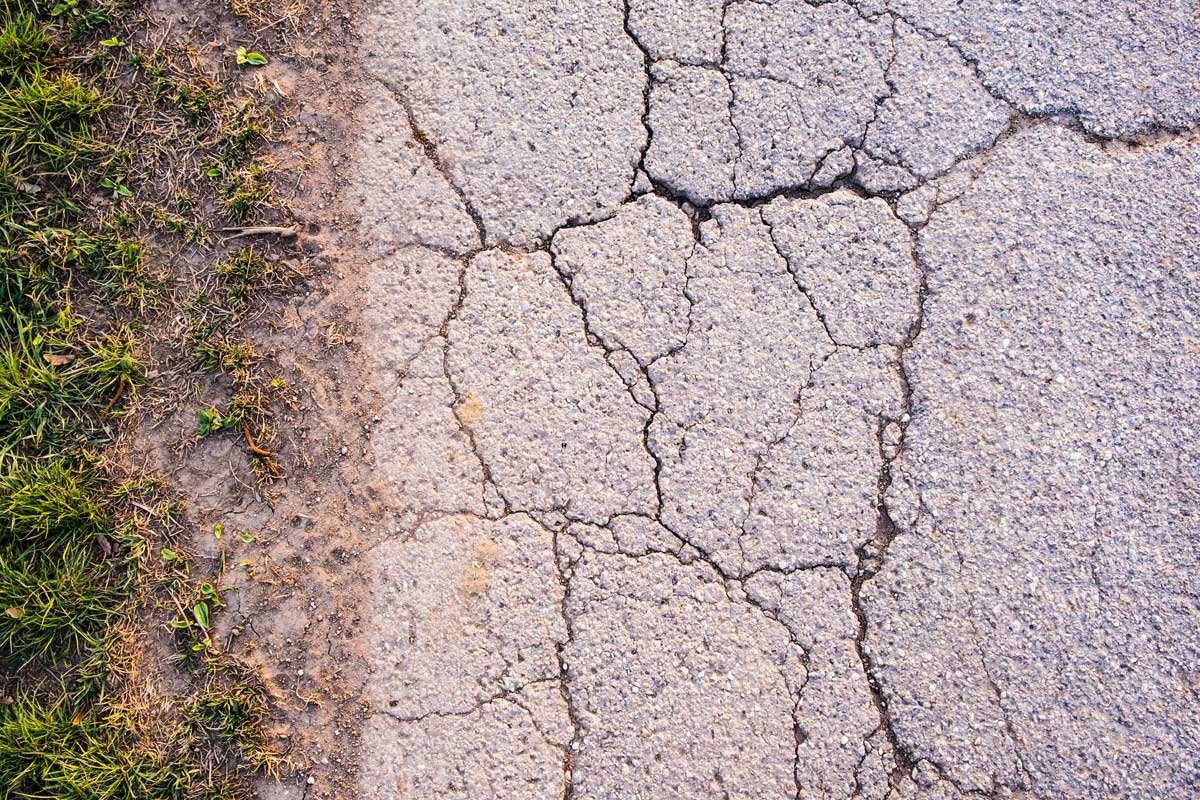
Water is the silent saboteur of pavement systems. Long before potholes, pop-outs, or rutting appear on the surface, moisture is busy stripping asphalt binders from aggregate, wedging ice crystals into concrete capillaries, and eroding the structural integrity that keeps our roads and parking lots sound. Understanding how and why this happens is the first step toward stopping it.
1. Why Moisture Matters in Pavements
-
Loss of strength – Even modest increases in internal moisture can cut asphalt mix stiffness and concrete compressive strength by 25 % or more. (researchgate.net)
-
Accelerated aging – Water promotes oxidation of asphalt binders and leaches alkalis and cement hydrates from concrete, hastening brittleness.
-
Freeze–thaw expansion – When temperatures swing across 32 °F (0 °C), trapped water can exert pressures exceeding 15 000 psi, enough to fracture aggregate or paste. (mdpi.com)
-
Chemical attack – Dissolved chlorides, sulfates, and de-icing salts piggyback on moisture, corroding steel reinforcement or softening asphalt mastic.
2. Pathways Water Uses to Invade
| Pathway | Typical Triggers | Materials Affected |
|---|---|---|
| Surface Cracks & Joints | Traffic fatigue, thermal contraction, saw‐cuts | Asphalt & concrete |
| Permeable Wearing Courses | High in‐place air voids (> 8 %) | Asphalt |
| Subsurface Capillary Rise | High ground-water table, poorly drained base | Concrete (D-cracking) |
| Inadequate Edge Drainage | Flush shoulders, clogged outlets | Both |
| Construction Moisture | Rain during paving, saturated subbase | Both |
3. What Moisture Does Inside Asphalt
3.1 Stripping and Adhesion Loss
Water wedges between binder and aggregate, breaking the adhesive bond. Once de-bonded, traffic shear quickly ravels the mix from the top down. (ucprc.ucdavis.edu)
Key mechanisms
-
Detachment – Water displaces asphalt at the interface.
-
Dissolution – Acidic or basic pore water alters binder chemistry.
-
Pore-pressure cycling – Repeated loading pumps water deeper, enlarging voids.
3.2 Mix Design Factors that Raise Risk
-
High dust coating or clay-rich fines
-
Rounded, polish-susceptible aggregates
-
Excess voids or segregation zones
-
Binder with low polarity (poor “wetting” of stone)
3.3 Asphalt Countermeasures
-
Lime or liquid anti-strip additives (0.5–1.5 % by weight of binder)
-
Polymer-modified binders with improved film thickness
-
Warm-mix technologies that lower construction water entrapment
-
Permeable treated base layers to vent trapped water
4. What Moisture Does Inside Concrete
4.1 Freeze–Thaw Micro-Cracking
When critically saturated concrete freezes, hydraulic and crystallization pressures generate internal cracking that propagates to the surface, causing scaling or pop-outs. (pmc.ncbi.nlm.nih.gov)
4.2 Alkali–Silica Reaction (ASR)
Moisture activates reactive silica in certain aggregates, forming expansive gels that crack and warp slabs. Constant internal relative humidity > 80 % is the tipping point.
4.3 Steel Corrosion
For reinforced concrete pavements, water plus chlorides break down the passive film on steel. Corrosion by-products occupy ~6 × the volume of original iron, spalling the cover.
4.4 Concrete Countermeasures
-
Air entrainment (6 ± 1 %): provides “pressure relief” chambers.
-
Low w/cm ratio ≤ 0.40 and supplementary cementitious materials (SCMs) to refine pore structure.
-
Integral hydrophobic admixtures (e.g., silane-siloxane) to repel water.
-
Joint sealing & timely resealing to block infiltration at sawn joints.
5. Detecting Moisture-Related Damage Early
| Test | Material | What It Reveals |
|---|---|---|
| Tensile Strength Ratio (TSR) | Asphalt | Loss of wet vs. dry strength (stripping potential) |
| Hamburg Wheel-Tracking | Asphalt | Rut depth and stripping inflection point under water bath loading |
| Saturated Surface-Dry Mass Change | Concrete | Capillary absorption rate |
| ASTM C666 Relative Dynamic Modulus | Concrete | Freeze–thaw durability factor |
| Ground-Penetrating Radar (GPR) | Both | Moisture pockets, base voids |
Regular GPR or infrared surveys can identify wet spots months before the first pothole forms, allowing targeted drainage corrections.
6. Design & Maintenance Strategies that Keep Water Out
6.1 During Design
-
Positive Drainage – 2 % cross-slope minimum; use longitudinal edge drains where water table is high.
-
Permeable Treated Base – Open-graded treated base (OGTB) or permeable asphalt treated base under surface courses.
-
Robust Mix Specifications – Limit VMA and air void variances; require anti-strip evaluation (AASHTO T 283).
-
Joint Details – For concrete, doweled joints with compressible sealant; avoid widened cracks as “French drains.”
6.2 During Construction
-
Weather Windows – Place lifts only when surface is dry and temperature ≥ 40 °F (5 °C) for concrete, ≥ 50 °F (10 °C) for asphalt unless using WMA.
-
Compaction Control – Target 92–96 % Gmm in asphalt; verify in-place density with gyratory correlations.
-
Curing & Protection – Maintain 7-day moist cure or equivalent for concrete; cover asphalt mats if rain is imminent.
6.3 During Service Life
| Preventive Action | Interval* | Benefit |
|---|---|---|
| Crack & joint sealing | 3–5 years | Blocks direct water entry |
| Fog seals & rejuvenators (asphalt) | 3–5 years | Restore binder film, reduce permeability |
| Surface drain inspection & clean-out | Annual | Keeps outlets flowing |
| Edge-drop and shoulder re-grading | 5–7 years | Prevents ponding at pavement edge |
| *Typical; adjust for climate & traffic. |
7. Emerging Innovations
-
Self-healing asphalt with steel fibers and inductive heating to close micro-cracks before water penetrates.
-
Ultra-High-Performance Concrete (UHPC) overlays offering < 0.008 in/hr (0.2 mm/hr) permeability.
-
Nano-silica & graphene admixtures that densify the cement matrix and slow absorption. (nature.com)
Moisture intrusion is not inevitable, it's manageable. By combining thoughtful mix design, meticulous construction practices, proactive maintenance, and modern materials that repel or heal, agencies can add decades to pavement life while slashing lifecycle costs. Ignore water, and the roadway will remind you, one pothole, blowout, or scaling slab at a time, that nature always exploits a weakness.
Keeping moisture out (or giving it a safe path to escape) remains the most cost-effective insurance policy a pavement owner can buy.


Life-Cycle Assessment of Pavement Alternatives: Quantifying Environmental Impacts from Cradle to Grave

When Is the Best Time of Year to Sealcoat?

Poor Subgrade Support: Detecting and Fixing the Root of Premature Rutting

Developing a Pavement Rehabilitation Plan Based on PCI Data

Joint Resealing & Spall Repair for Concrete Roads
